40+ Best AI Agent Tools for 2025 (Ultimate Comparison of Platforms, Frameworks & Use Cases)
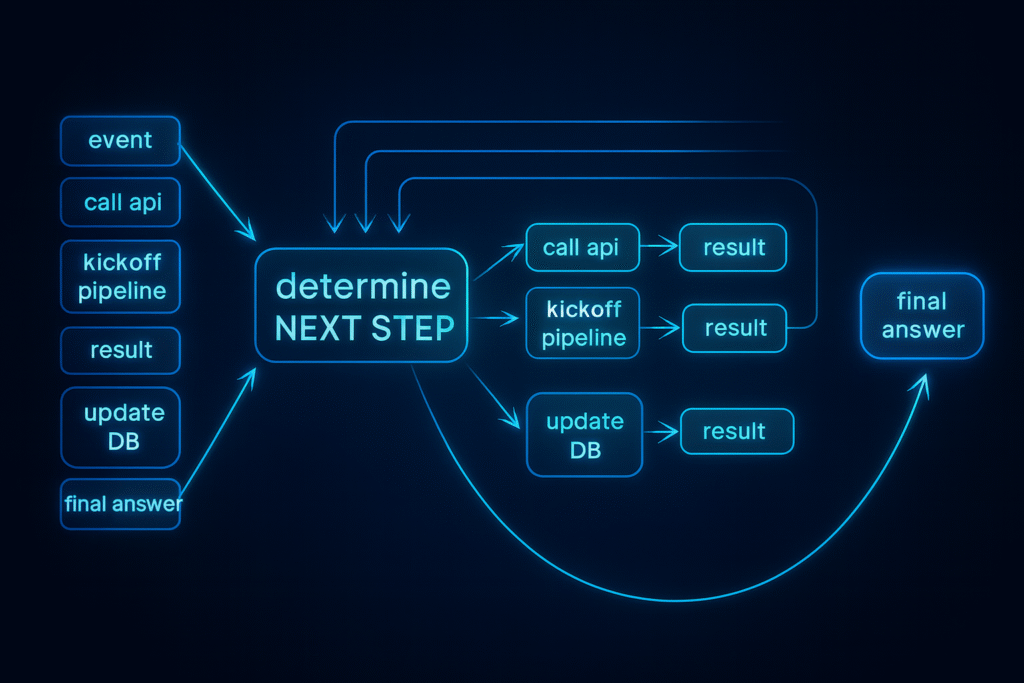
- AI agent tools turn large language models into doers that can plan, call tools, and complete multi-step tasks.
- Most organizations get the best ROI from Level 2–3 agents with human oversight, not fully autonomous systems.
- Non-technical teams typically start with visual platforms like Zapier Agents, Make, Gumloop, or Lindy.
- Engineering-heavy teams often prefer frameworks like LangGraph combined with automation tools such as n8n.
- Success depends more on guardrails, monitoring, and workflow design than on any single model choice.
Agentic AI is shifting from demo videos and hackathon projects into practical systems that answer emails, close tickets, draft code, schedule meetings, and even help run operations. The challenge is not a lack of tools but the opposite: there are dozens of platforms, frameworks, and vertical solutions, all claiming to be “the future of work”.
This guide brings clarity. It compares more than 40 AI agent tools and organizes them by autonomy level, use case, and team profile. The goal is simple: help you move from hype to a realistic shortlist, and from demos to production.
Editor’s Picks: 5 Standout AI Agent Tools
If you just want a fast shortlist, here are five tools that cover a wide range of needs and are representative of their categories. Use this as a starting point, then dive into the detailed sections.
| Tool | Best For | Why It Stands Out | Potential Drawback |
|---|---|---|---|
| n8n | Technical teams that want self-hosted, flexible agent workflows | Highly customizable, open-source, excellent for connecting agents to internal systems | Requires more technical skill than most “no-code” tools |
| Make | Ops and RevOps teams automating SaaS workflows | Visual builder, strong integrations, good for Level 2–3 agentic flows | Large, complex scenarios need governance to stay maintainable |
| Zapier Agents | Non-technical teams automating everyday work | Huge app ecosystem, familiar UI, easy experimentation with AI-powered flows | Less suitable for very custom or highly regulated environments |
| LangGraph | Developers building complex multi-agent systems | Graph-based design, good for orchestrating specialized agents and tools | Developer-focused: not a no-code solution for business users |
| Lindy | Teams that want “digital teammates” for white-collar work | No-code/low-code interface, focus on email and workflow agents for business teams | Less flexible than raw frameworks for deeply custom infrastructure |
AI Agents Landscape: Categories at a Glance
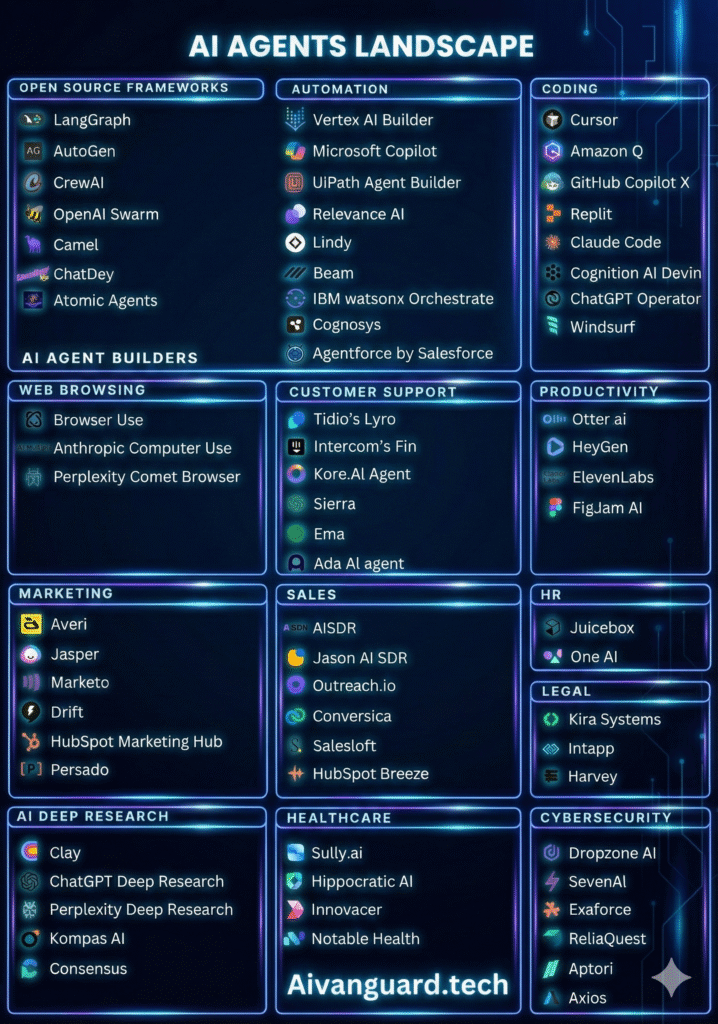
Before comparing individual tools, it helps to see how the ecosystem is structured. The diagram below groups representative tools into categories such as open source frameworks, automation, coding, marketing, sales, AI research, HR, legal, healthcare, and cybersecurity.
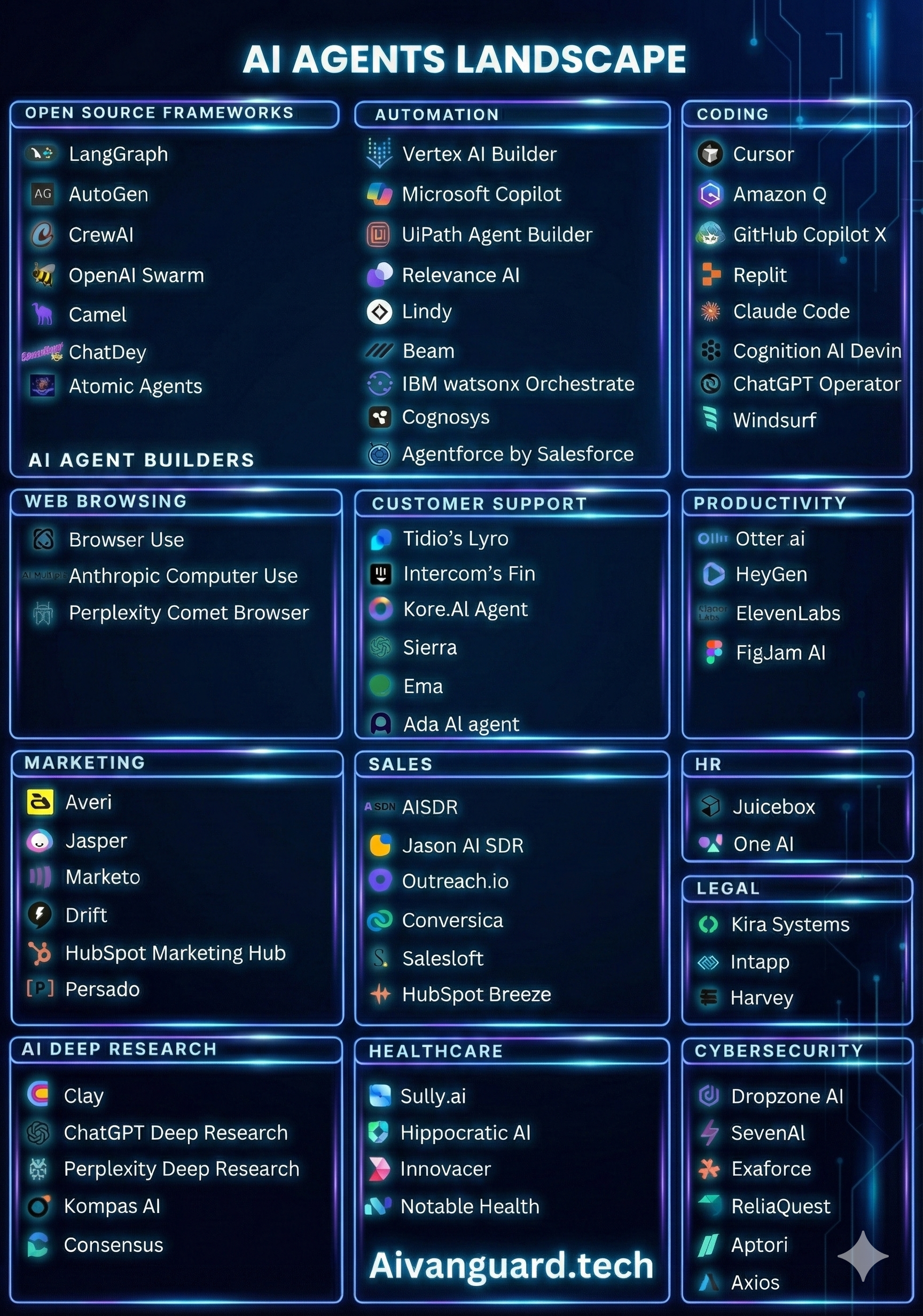
This landscape is not exhaustive, but it illustrates how quickly the space is fragmenting into domain-specific and workflow-specific solutions. The rest of this guide zooms in on how to reason about them.
Quick Comparison: Top AI Agent Tools by Category (2025)
The table below highlights a representative subset of widely used platforms and frameworks. Use it as a starting shortlist; details follow in later sections.
| Tool / Platform | Best For | Type | Key Strengths | Plan Structure (High-Level) |
|---|---|---|---|---|
| n8n | Technical teams that want low-code, self-hostable agent workflows | Workflow & agent orchestration | Flexible node-based builder, strong integrations, self-hosting options | Free tier plus usage-based paid plans |
| Make (Celonis) | Ops teams needing visual automation across many SaaS tools | Low-code automation & agentic scenarios | Visual scenarios, thousands of integrations, branching logic | Free starter tier, tiered commercial plans |
| Zapier Agents | Non-technical users who want agents on top of 1,000s of apps | Agent layer on workflow automation | Huge app ecosystem, browser extensions, long-running agents | Free entry tier, usage-based paid tiers |
| LangGraph | Developers building complex multi-agent systems | Agent framework | Production-grade workflows, graph-based architecture, tool calling | Open-source components plus managed options |
| IBM watsonx Orchestrate | Enterprises with strong governance and compliance needs | Enterprise orchestration & agents | Security, compliance, enterprise integrations, governance | Custom enterprise pricing |
| Relevance AI | Go-to-market & operations teams designing multi-agent workflows | Multi-agent orchestration platform | Agent builder, scheduling, approvals, embedded analytics | Free tier plus multiple paid tiers |
| Beam AI | Document-heavy business workflows (legal, ops, finance) | Document workflow & agents | Deep document processing, integrations, approval flows | Commercial plans (often per-seat or usage-based) |
| Lindy | Teams that want domain-specific “digital teammates” | No-code multi-agent platform | No-code builder, email & CRM workflows, compliance focus | Free credits plus paid plans |
| Saner AI | Individuals and small teams managing personal workflows | Personal productivity & agent workspace | Calendar + email + notes agent, focus on daily planning | Freemium with premium tiers |
| Gumloop | No-code AI flows for non-technical users | No-code automation & agent builder | Templates, prebuilt AI nodes, credit-based usage | Free credits plus paid tiers |
| Tidio Lyro | SMBs looking for AI live chat & support agents | Customer support agent | Chat-first experience, SMB focus, handoff to humans | SaaS plans with agent features included |
| AiSDR | Sales teams that want AI-led outreach & follow-ups | Sales development agent | Outbound sequences, follow-up automation, CRM sync | Subscription pricing, usually seat or usage-based |
| Kompas AI | Deep research & long-form analysis | Research & report generation agent | Multi-source research, citations, report building | Commercial plans, often per-seat |
| Cursor | Developers who want an AI coding partner in the IDE | Coding agent | Deep IDE integration, code understanding, refactoring | Free usage tier plus paid plans |
| Otter.ai | Meetings & note-taking with AI assistance | Productivity & meeting agent | Real-time transcription, summaries, action items | Free and paid plans |
There are many additional frameworks, open-source projects, and domain-specific offerings not listed here. The goal is not to be exhaustive but to give you enough coverage to recognize patterns and make an informed shortlist.
How This Guide Was Built
Rather than ranking tools purely on marketing claims, this guide leans on three sources:
- Hands-on experimentation with representative tools in each category,
- Vendor documentation and public product demos, and
- Conversations with teams deploying agents in production environments.
Because every organization has different constraints, this guide avoids “one-size fits all” scores. Instead, it gives you a structured way to reason about autonomy, risk, and fit, so you can apply the same lens to any new tool that emerges.
What Is an AI Agent Tool?
An AI agent is more than a model answering a single prompt. It is a system that:
- Receives a goal or task (often in natural language),
- Plans actions using a large language model or other reasoning component,
- Interacts with tools, APIs, documents, or user interfaces,
- Maintains context and memory across steps, and